Showing posts with label 2FA. Show all posts

Aug 11, 2022

Cyber Attack on Cisco

The threat actors manage to gain access to corporate network even the VPN is protected with MFA. And 2.75GB of data are stolen from Cisco.

IMO, using push notification MFA can be insecure if it is mis-configured. Same for any 2FA or MFA, a mis-configured security controls is just a false sense of security. 

Here is the initial vector from Cisco Talos.

Initial access to the Cisco VPN was achieved via the successful compromise of a Cisco employee’s personal Google account. The user had enabled password syncing via Google Chrome and had stored their Cisco credentials in their browser, enabling that information to synchronize to their Google account. After obtaining the user’s credentials, the attacker attempted to bypass multifactor authentication (MFA) using a variety of techniques, including voice phishing (aka "vishing") and MFA fatigue, the process of sending a high volume of push requests to the target’s mobile device until the user accepts, either accidentally or simply to attempt to silence the repeated push notifications they are receiving. Vishing is an increasingly common social engineering technique whereby attackers try to trick employees into divulging sensitive information over the phone. In this instance, an employee reported that they received multiple calls over several days in which the callers – who spoke in English with various international accents and dialects – purported to be associated with support organizations trusted by the user.  

Once the attacker had obtained initial access, they enrolled a series of new devices for MFA and authenticated successfully to the Cisco VPN. The attacker then escalated to administrative privileges, allowing them to login to multiple systems, which alerted our Cisco Security Incident Response Team (CSIRT), who subsequently responded to the incident. The actor in question dropped a variety of tools, including remote access tools like LogMeIn and TeamViewer, offensive security tools such as Cobalt Strike, PowerSploit, Mimikatz, and Impacket, and added their own backdoor accounts and persistence mechanisms. 

We all can learn more TTP (tactics, techniques, and procedures) from this Cisco breach at Cisco Talos.


Links:
Jul 27, 2022

SMS 2 Factor authentication

Why is SMS 2 Factor authentication not secure?

Firstly, I would say that there is nothing wrong 2FA; it is wrong when we use 2FA with SMS, and this is a typical kind of "mis-configuration".

Second, 2FA via SMS is easy to setup and requires no download of any app or reader except a mobile phone with SIM card.

Anyway, NIST, USA has recommended that 1-time SMS is no longer secure to.

SMS Vulnerabilities

  • Intercepting SMS codes
  • Spoof SMS verification
  • Phone account hijacking


Alternative secure authentication options

  1. OTP method - one-time password
  2. FIDO U2F (leading option for 2FA) - similar to smart card wit PKI.
  3. Push Authentication - faster than typing password
  4. Multi-Factor Authentication (MFA) - best solution


Links:

Jun 6, 2022

Adopting PasswordLess

Why passwordless?

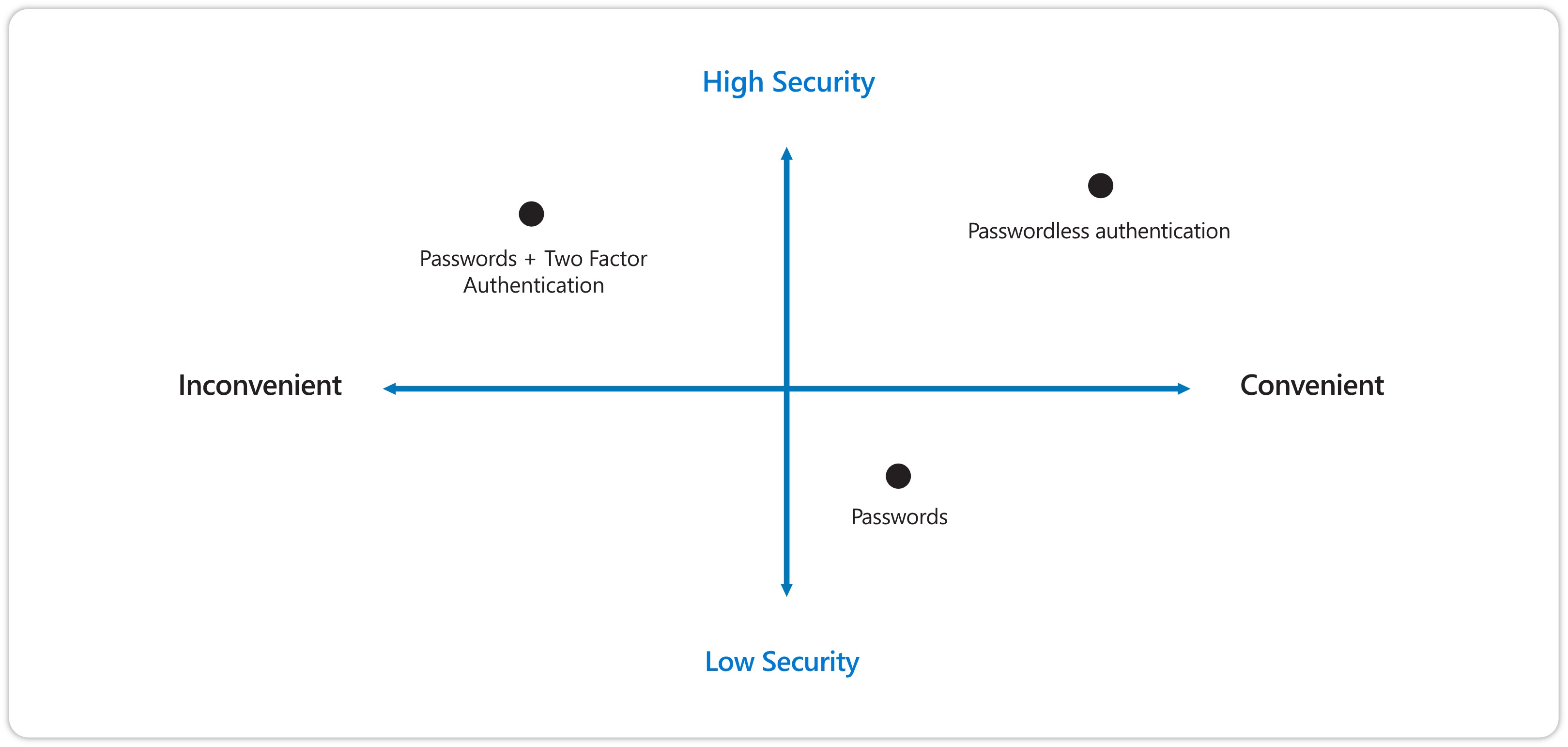
Signing in without a password seems almost nonsensical, yet it can be more secure than traditional sign-ins.

Passwordless sign-in with only an email address is almost a backhanded approach to two-factor authentication. By proving you have access to that email account — by clicking a link emailed to you — you’ve authenticated securely and need nothing else. The site using this technique is relying on your maintaining the security of your email account appropriately.


 Links:

Apr 14, 2022

Essential Security from CISA and NSA

CISA and NSA have published a lot of good resources for Cybersecurity. For example,  an advanced persistent threat (APT) that capable to gain full access to multiple ICS/SCADA was discovered recently.

The tool enable the APT actors to scan for, compromise, and control affected devices once they have established access to the OT network. Here's the technical details of the APT tools for Schneider Electric devices:

  • Interact via management protocols and Modbus (502/tcp)
  • Identifies PLCS via multicast 27127/udp
  • Brute-force using CODESYS via 1740/udp
  • Conduct DoS to PLC
  • Conduct a 'packet-of-death' attach to crash the PLC
  • Send custom Modbus commands

Proactive mitigations against APT tools that targeting ICS/SCADA devices

  •  Isolate ICS/SCADA from corporate and Internet networks
  • Enforce multi-factor authentication
  • Prepare and exercise cyber incident plan
  • Regular update of password, especially all detail passwords.
  • Maintain known-good offline backup
  • Implement robust log collection and retention
  • Deploy Device Guard, Credential Guard, and Hypervisor Code Integrity (HVCI)
  • Leverage continuous OT monitoring and alert
  • Enforce principle of least privilege


Links: